Why You Need Both Dentists and Orthodontists to Care for your Teeth!
When it comes to caring for your teeth, did you know you should see both a dentist and an orthodontist? you’ve probably been going to a dentist for years. When you begin orthodontic treatmentSmile Menu, you might think you won’t need to see the dentist for a while. After all, you have regular visits in the dental chair, and someone is taking care of your teeth—does it matter whether that person is a dentist or an orthodontist?
It does matter. These dental professionals have different purposes when it comes to caring for your teeth, so one cannot replace the other. Read on to learn why you need both a dentist and an orthodontist.
 What’s the Difference Between Dentists and Orthodontists?
 What’s the Difference Between Dentists and Orthodontists?
Dentists and orthodontists both earn a four-year degree as doctors of dentistry, so all orthodontists were first trained as general dentists—but not all dentists become orthodontists. Orthodontists study for at least two more years, earning a postgraduate certificate in orthodontics (many also earn a Master’s Degree.) Dr. Jones studied at the Center for Advanced Dental Education at Saint Louis University for two and a half years to earn the title of “orthodontist” as well as his Master’s Degree in Dental Science.
While some dentists may offer treatment using aligners, that doesn’t make them orthodontists. Orthodontists study to become experts in the art and science of straightening teeth and correcting other issues with the jaw. Orthodontists are responsible for correcting misaligned teeth by designing a treatment plan that’s right for each individual patient.
Dentists focus on general oral health, such as dental cleanings and check-ups. Dentists can restore teeth with cavities, extract teeth, treat gum disease, place crowns on compromised or fractured teeth, and help replace missing teeth. They can also identify issues with your jaw, gums, or teeth that may require a specialist. They may refer you to an orthodontist. However, a referral is not required for insurance or any other reason. You can take the initiative to visit an orthodontist on your own if you have concerns about your smile or your child’s smile. When you’re wearing braces, good oral health is even more important than ever—so you need your dentist more than ever.
Why You Need Them Both
Regular dental cleanings and check-ups are essential for removing plaque and identifying tooth decay before it worsens. That doesn’t stop when you’re seeing an orthodontist! Most people need to see the dentist every six months, and since most orthodontic treatment plans take around two years to complete, you will be due to see your dentist several times throughout your treatment.
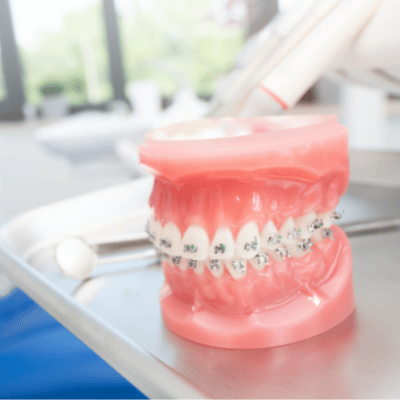
That’s especially true when you consider that braces can make it more challenging to care for your teeth. Braces create more places for food to get stuck, which can lead to decay and gum disease if not cleaned thoroughly. Our team at Jones Family Orthodontics will offer tools and guidelines for proper brushing and flossing while you have your braces. Still, dental check-ups throughout orthodontic treatment with your family dentist remain essential. Like always, your dentist aims to spot small cavities before they grow, and professional cleanings will keep your mouth healthy.
Maintaining a healthy foundation below the teeth in the gums and bone is key to successful and healthy tooth movement. In some situations for patients more prone to gum disease, your dentist and orthodontist may ask you to see a “periodontist,” a dentist specializing in maintaining the health of the gums and bone that support the teeth.
Think of your orthodontist and dentist as your oral care team, and maintain your appointments with them both.
If you’ve got questions about orthodontics and a healthy, beautiful smile, contact Jones Family Orthodontics. Request a complimentary consultation online or call us at (360) 863-0303